NOVEMBER 2026
Dear Reader!
We would like to thank all organisations and partners for their continued support, cooperation and valuable contributions to our European remembrance community.
We warmly welcome further news, event announcements, programmes, research, educational materials and experiences related to Holocaust remembrance. Every contribution helps us share knowledge, connect organisations and communities, and make remembrance more visible across Europe.
Let us continue building this network together. We look forward to receiving your materials and strengthening our cooperation in the months ahead.
the editors:
József VASVÁRI and Ákos GYÖMBÉR
1.) NOVEMBER 2026 MONTHLY PROGRAMS
DATE
06. November 2026
LOCATION
Hotel Helikon, Makkosjanosi | UKRAINE
EVENT DESCRIPTIONTHE LIFE AND ROLE OF THE TRANSCARPATHIAN JEWISH COMMUNITY IN LOCAL SOCIETY Conference
Let's learn about the life of Jews in Transcarpathia and their role within the Transcarpathian community. Target group: Young people aged 18-30, survivors, their descendants, those interested in the topic.
MORE INFORMATION LINK FROM THE ORIGINAL NEWSLETTER
DATE
10–11. November 2026
LOCATION
Max-Born-Gymnasium, Germering, Bavaria | GERMANY
EVENT DESCRIPTIONWorkshop in Bavaria
The first programme will begin with an interactive workshop introducing students to the historical context of the Shoah and preparing them for their visit to the Dachau Concentration Camp Memorial Site on the following day. There, the group will take part in a guided tour of the former camp grounds and a study workshop exploring historical texts and photographs relating to the history of the camp and its prisoners. Particular emphasis will be placed on the everyday lives and experiences of those imprisoned in Dachau. The programme will conclude with a joint discussion and reflection on the two days.
MORE INFORMATION LINK FROM THE ORIGINAL NEWSLETTER
DATE
13. November 2026 | 9:00
LOCATION
Dessewffy Street Synagogue, 23 Dessewffy Street, 1066 Budapest | HUNGARY
EVENT DESCRIPTIONRemembrance Walk in Budapest
Starred houses, ghetto, stumbling stones, shoes. Learn how the Nazis rounded up Jews on the anniversary of the launch of the Swiss protected company.
MORE INFORMATION LINK FROM THE ORIGINAL NEWSLETTER
DATE
23–24. November 2026
LOCATION
Estetal School, Hollenstedt, Lower Saxony | GERMANY
EVENT DESCRIPTIONWorkshop in Lower-Saxony
After an introductory workshop at the school on the first day, the students will visit the Bergen-Belsen Memorial for a guided tour of the former camp grounds and a study workshop. This session will examine the societal, economic and institutional conditions that enabled Nazi crimes, using the concentration camp as a case study. It will explore the motivations, responsibilities and scope for action of perpetrators, collaborators and bystanders. By considering different perspectives, the workshop aims to encourage students to critically reflect on these dynamics in the context of broader processes of societal radicalisation.
MORE INFORMATION LINK FROM THE ORIGINAL NEWSLETTER
DATE
26. November 2026 | 16:00 CET (15:00 WET)
LOCATION
Webinar
EVENT DESCRIPTIONMemories of Courage: Aristides de Sousa Mendes, the Holocaust and Today’s Challenges in Europe
This event will explore the legacy of the Portuguese diplomat who saved thousands of lives during the Second World War, reflecting on Portugal’s historical context and the enduring relevance of his actions. The event will also explore how his example continues to resonate today, inspiring reflection on cultural diversity, fundamental rights, and the importance of civic courage in addressing intolerance, discrimination, and the challenges facing European democracy.
MORE INFORMATION LINK FROM THE ORIGINAL NEWSLETTER
2.) DON'T MISS THE ONLINE EVENTS
26. November 2026 | 16:00 CET (15:00 WET) / REGISTRATIONEVENT DESCRIPTION
Memories of Courage: Aristides de Sousa Mendes, the Holocaust and Today’s Challenges in Europe
3.) MEET A PROJECT
(a brief overview of one of the applications)
PROJECT NAME
RECORD
Research and Documentation on Contemporary Holocaust Distortion
PROPOSAL
The RECORD project strengthens the resilience of European societies against contemporary forms of Holocaust distortion, which fuels antisemitism and erodes democratic values. The project also examines how misogyny and racism intersect with antisemitism within extremist milieus. Co-funded by the European Union, RECORD brings together civil society organisations, Jewish communities, journalists, policymakers, and law enforcement agencies. It provides stakeholders with knowledge, practical tools, and opportunities for dialogue and collaboration through a range of events, workshops, and reports.
CONSORTIUM
• democ
• World Jewish Congress
• B'nai B'rith InternationalUniversity of Vienna (COO)
🌐 Website
📘 LinkedIn
✉ Contact email
4.) MONTHLY MEMORIAL DAYS
01 November 1943
The Kovno Ghetto Becomes a Concentration Camp
German authorities converted the Kovno (Kaunas) ghetto in Lithuania into the Kauen concentration camp. The change marked another stage in the persecution and exploitation of the remaining Jewish population.
02 November 1943
Liquidation of the Riga Ghetto
German authorities liquidated the Riga ghetto in Latvia and murdered the remaining residents, at least 2,000 people. The surviving Jewish population was transferred to concentration camps, including Kaiserwald.
03–04 November 1943
Operation Harvest Festival (Aktion Erntefest)
German SS and police units carried out the largest single massacre of Jews during the Holocaust. Approximately 42,000 Jewish prisoners were murdered at Majdanek, Trawniki and Poniatowa in German-occupied Poland.
09–10 November 1938
Kristallnacht – The November Pogrom
Nazi-organised violence spread throughout Germany and its annexed territories. More than 1,400 synagogues were burned, thousands of Jewish businesses and homes were vandalised, and approximately 30,000 Jewish men were arrested and deported to concentration camps. Kristallnacht marked a decisive escalation in the persecution of Jews under the Nazi regime.
18 November 1944
The Death Marches from Budapest to Mauthausen
With the assistance of the Hungarian Arrow Cross Party, Jewish men were rounded up by the Nazis and forced to leave Budapest under the designation “Swiss Protected Column”. They were driven towards Mauthausen in brutal forced marches, travelling on foot and on barges, without adequate food or provisions.
30 November 1941
The Rumbula Massacre near Riga
German SS and police units, assisted by Latvian collaborators, murdered approximately 15,000 Jews from the Riga ghetto and around 1,000 Jews deported from Germany in the Rumbula Forest. This was the first of two major mass shootings; together, the massacres of 30 November and 8 December claimed approximately 25,000 Jewish lives.
November reminds us that hatred, once tolerated, can turn into organised violence and unimaginable destruction.
The memory of the victims calls on every generation to recognise injustice, reject antisemitism and stand up for human dignity.
5.) REPORT ON SUCCESSFUL PROGRAMS
Passing Stories On: MEM-ART UNI Launches in Vienna
EVENT DESCRIPTIONMore than 70 students, (university) teachers, researchers, remembrance practitioners, descendants of Holocaust survivors and other interested participants gathered at Vienna’s Hofburg on 8 October 2026 for the MEM-ART UNI kick-off workshop.
A reading by Austrian writer Vladimir Vertlib and a panel discussion brought together perspectives from literature, oral history, Holocaust education and artistic practice. The speakers explored how families pass on memories of persecution, flight and exile, how silence shapes later generations’ knowledge, and how personal stories can engage young people in Holocaust remembrance. They also discussed bringing different histories of displacement into dialogue while respecting their historical differences.
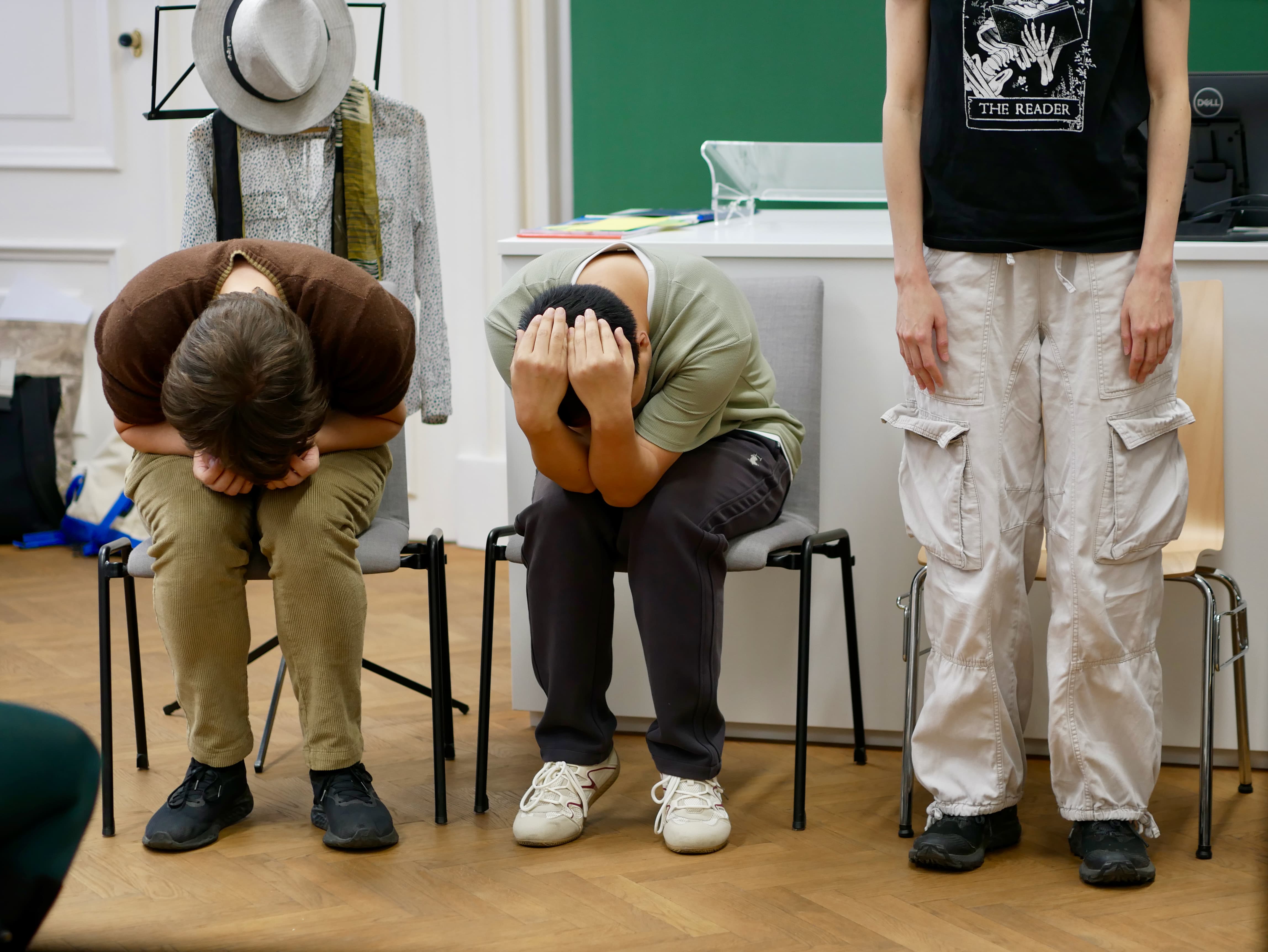
A Memory-Performance Lab invited participants to explore what it means to engage creatively with another person’s memories. Its starting point was the life story of Lisa Rosenbaum (1932–2026), whose Jewish family had been persecuted under National Socialism. At the age of 93, she had spoken about her history for the first time with her niece, who shared excerpts from their conversation during the workshop.
Working in small groups with video, voice, movement and text, participants responded creatively to Lisa’s story, exploring abstraction and fictionalisation. The Lab addressed a central question for MEM-ART UNI: what can artistic practice contribute to cultures of remembrance? Through shared experimentation, participants experienced how artistic research can generate knowledge and insight in its own right.
The kick-off workshop offered fresh perspectives and strengthened connections for the collaboration ahead. Students from the University of Vienna, Aix-Marseille Université and the University of Wrocław will interview descendants of Jewish Holocaust survivors and create short films, audio walks and performances based on their family histories of flight and exile.
Read the blogpost with more photos on the MEM-ART UNI website
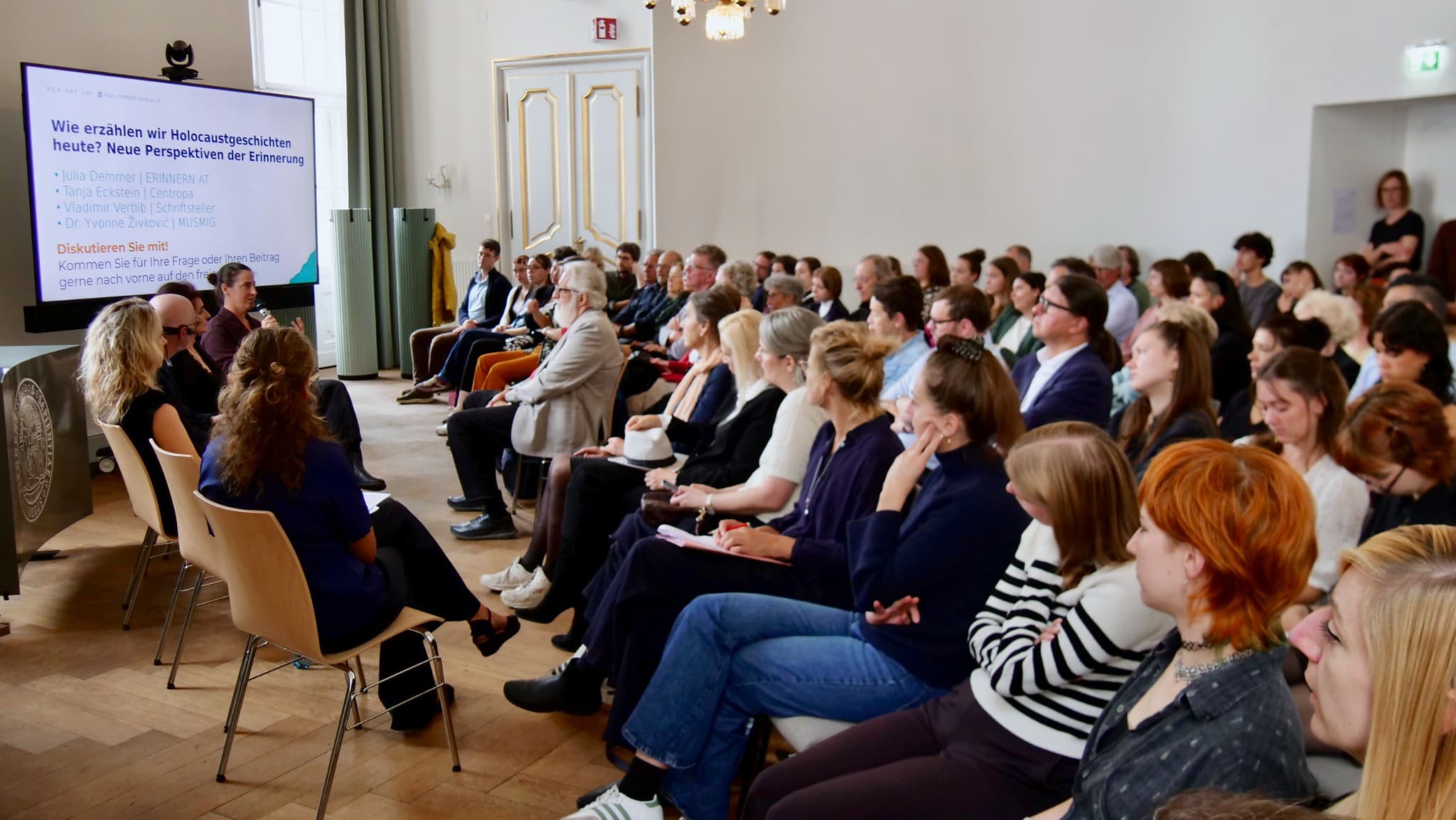
© Maria Grünberger
WITNESS-REM Project Kick-off – Building a European Culture of Holocaust Remembrance
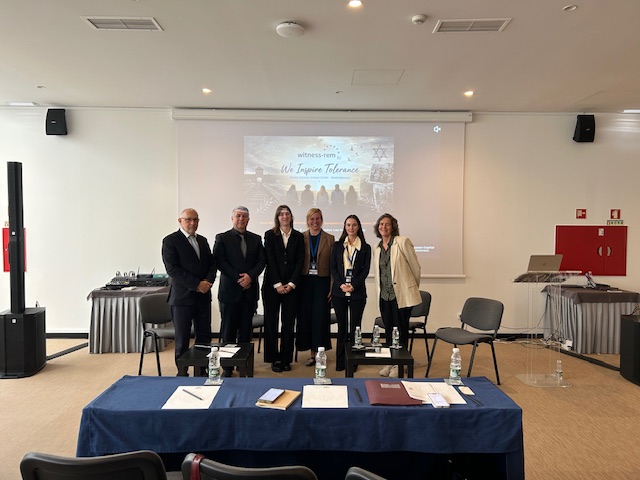
EVENT DESCRIPTIONOn 30 October 2026, the WITNESS-REM project officially kicked off in collaboration with Cascais, the European Capital of Democracy 2026. The hybrid event brought together around 50 participants in person in Estoril and more than 100 online, connecting people from across Europe around a shared commitment to Holocaust remembrance.
The event was hosted and led by Martina Knoll (ECoD NPO), who also introduced the WITNESS-REM project, presenting its aims, scope and planned activities, as well as its connection to Cascais as the European Capital of Democracy 2026. Lea Anastasia Franzky (ECoD NPO) joined as online co-host.
The programme continued with the panel discussion “WITNESS. REMEMBER. CONNECT. – Building a European Culture of Holocaust Remembrance.” Consortium representatives József Vasvári and Ákos Gyömbér (KEP), Carolin Schneider (Deutsche Gesellschaft e.V.) and Mónica Rocha e Melo (IPAV) took part in the discussion in person, while András Mester (KMTT) and Stefan Lütgenau (Forster Europe) joined online. They shared perspectives on the project’s regional activities and the importance of connecting local experiences into a Europe-wide narrative of the Holocaust.
The kick-off marked an important first step in strengthening cooperation among the partners and engaging wider audiences. Through upcoming events, educational activities and regional initiatives, WITNESS-REM aims to preserve the memory of the Holocaust and pass its lessons on to younger generations across Europe.
© WITNESS-REM
6.) CALL TO ACTION / HAVE AN EVENT TO SHARE?
Are you organising a Holocaust remembrance event next month?
Send us:
Date • Location (country, city) or Online • Event description • Link to WP or registrationNEXT deadline: 25th of November 2026!SEND YOUR EVENT“Co-Funded by the European Union. Views and opinions expressed are however those of the author(s) only and do not necessarily reflect those of the European Union or the European Commission CERV-2025-CITIZENS-REM-HOLOCAUSTJEW. Neither the European Union nor the granting authority can be held responsible for them.”